Keeping Your Dog Hydrated on Walks and Hikes
21 July 2026 · 3 min read
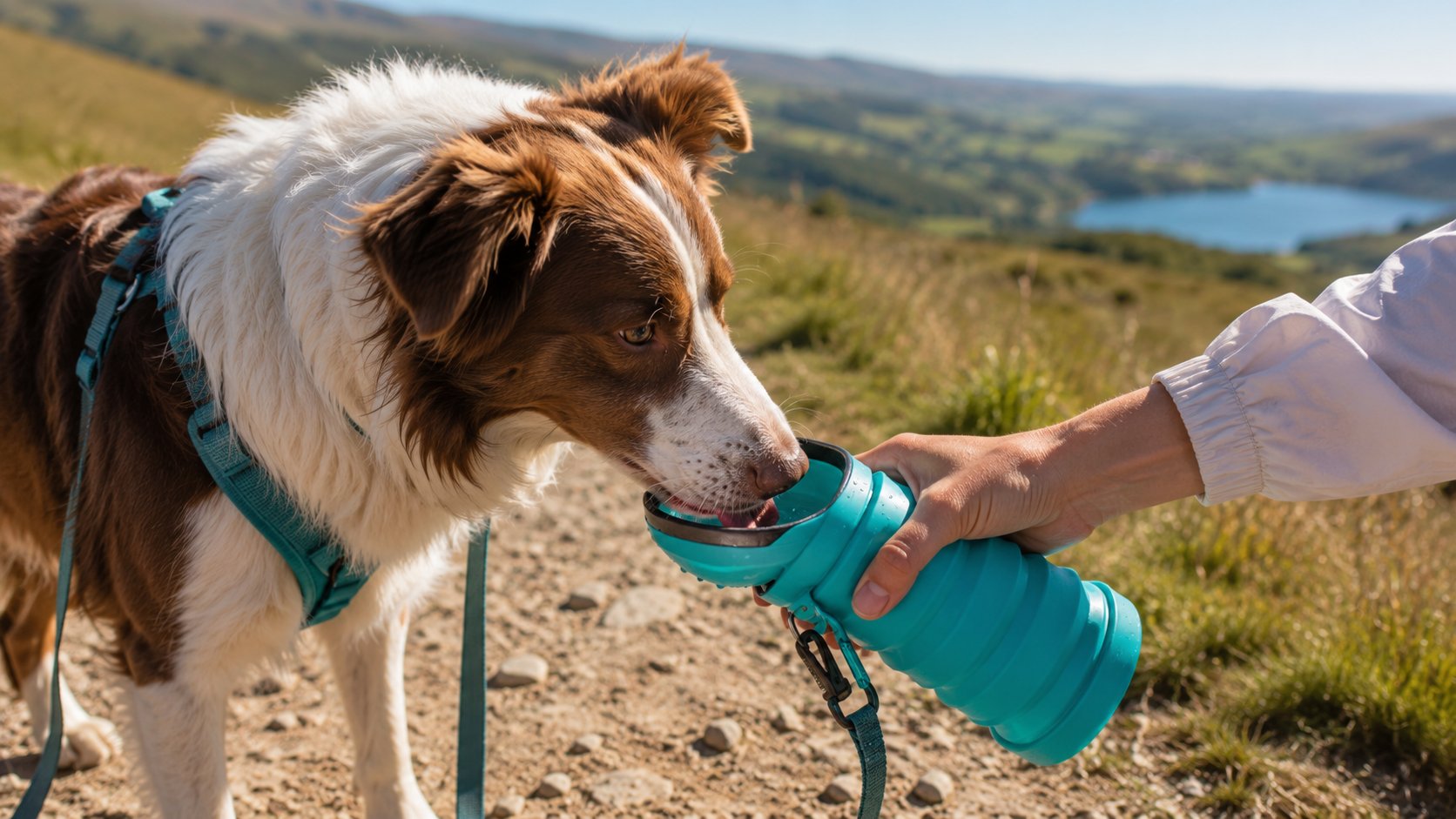
It's easy to focus on water for yourself on a longer walk and forget that your dog is working just as hard, if not harder — especially if they're the one running ahead, doubling back, and covering two or three times the distance you are.
Why It's Easy to Miss
Dogs don't always show early signs of being thirsty the way people do, and a lot of the classic signs of dehydration — heavy panting, tiredness, dry gums — can look a lot like a dog who's just had a good, tiring walk. That makes it easy to miss the point where a dog has actually gone from "worked hard" to "needs water now," particularly on warmer days or longer routes without an obvious stream or puddle along the way.
What to Watch For
Beyond heavy panting, look out for thick or excessive drooling, gums that feel dry or tacky rather than wet, and a general drop in energy that seems out of proportion to how far you've actually walked. If you gently pinch the skin at the back of your dog's neck and it's slow to spring back into place, that's also a reasonably reliable sign they need water and a rest.
Making Water Easy to Offer
The main reason owners don't offer water on a walk isn't that they don't care — it's that carrying an open bowl is awkward, and stopping to improvise with cupped hands only goes so far. A proper travel bottle solves this directly: The SipTrail Bottle — Travel Dog Water Bottle and the Bora Paw Trail Bottle are both built for exactly this, letting you offer a proper drink in seconds without needing anywhere flat to put a bowl down. Pairing either with a collapsible Pocket Dish — Collapsible Dog Bowl gives your dog a stable surface to drink from properly, rather than lapping awkwardly at a bottle cap.
How Often to Offer It
As a general guide, it's worth offering water every 20 to 30 minutes on a warm-weather walk or hike, rather than waiting until your dog looks like they need it. Dogs will often keep going past the point they should stop, especially high-energy breeds who are more focused on the walk itself than on how they're actually feeling.
On Hot Days, Plan the Route Around Water
Where possible, plan longer walks or hikes around routes with shade and, ideally, safe water access along the way — and consider walking earlier in the morning or later in the evening during genuinely hot spells, when the ground itself is cooler underfoot as well as the air. A well-hydrated dog on a sensibly timed walk is a far safer (and happier) one than a dog pushed through the hottest part of the day on willpower alone.