Slow Feeding for Dogs: Why It Matters and How to Do It Right
10 July 2026 · 3 min read
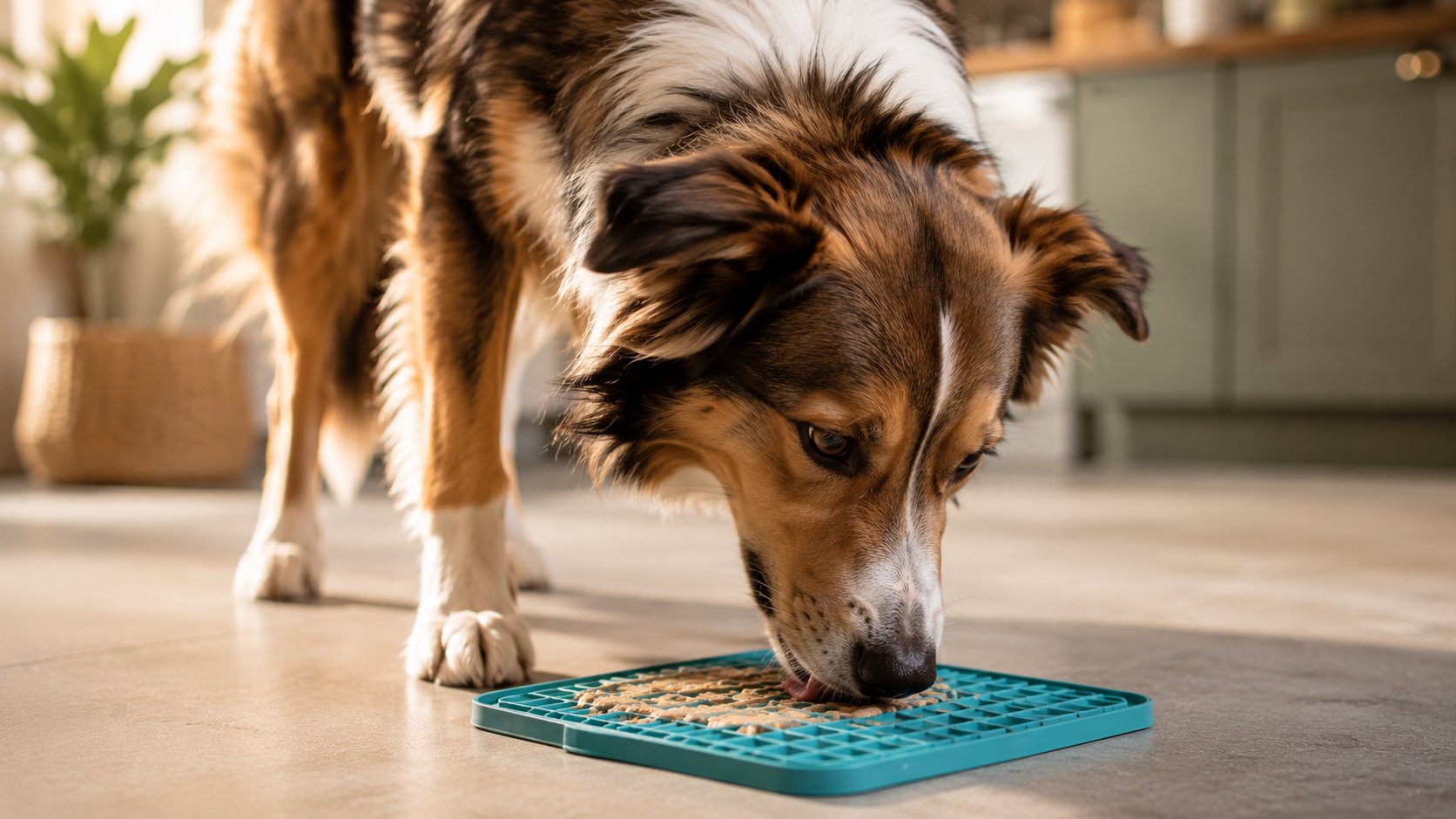
If your dog empties their bowl in under a minute, you're not imagining it, and you're not alone — fast eating is one of the most common feeding habits owners ask about. It's rarely about hunger. It's usually about instinct, boredom, or simply never having had a reason to slow down.
Why Dogs Wolf Their Food Down
Dogs are natural opportunistic eaters, and in a multi-dog household or a home with any food competition (even just a cat wandering past the bowl), eating fast is a learned survival habit rather than greed. Some dogs also eat quickly out of boredom — food is the most exciting five minutes of an otherwise quiet day, so they rush to get it, then have nothing left to do afterwards.
Why It's Worth Slowing Down
Eating too quickly is linked to a few genuine problems: dogs swallowing more air, which can cause bloating and discomfort, a higher risk of regurgitation shortly after eating, and simply missing out on the mental engagement that a slower meal provides. For dogs who eat out of boredom, a fast meal also means a longer stretch of the day with nothing to do — which for some dogs shows up later as restlessness or unwanted chewing.
How Slow Feeders Actually Help
The idea behind a slow feeder or lick mat isn't to restrict how much your dog eats, just how quickly. The Bora Anti-Anxiety Toy for Dogs uses a rotating lick sphere that controls how much food is released at a time, turning a normal meal or treat into a longer, more engaging activity rather than something gone in seconds. The Calm Square — Slow Feeder Lick Mat works on the same principle with a textured surface designed for spreadable food — soft treats, plain yoghurt, or a bit of wet food — and can be frozen beforehand to make it last even longer, which is especially useful on a day your dog needs a bit of quiet, focused time.
When It's Especially Worth Using
Slow feeding tends to earn its keep most on days that are already a bit chaotic — visitors in the house, a delivery at the door, or any time you need your dog settled and occupied for a few minutes rather than under your feet. It's also genuinely useful during grooming or bath time (more on that in a separate article), giving your dog something to focus on that isn't wriggling away from the brush.
Getting Started Without Overcomplicating It
You don't need to switch every meal over straight away. Start by using a slow feeder or lick mat for one meal a day, or just for treats and enrichment between meals, and see how your dog gets on with it. For portable use on the go, pairing a slow feeder with a collapsible option like the Pocket Dish — Collapsible Dog Bowl means you can offer a proper, calm feeding break even when you're out for the day.